Ripple Can Win Without XRP Winning. So What Are You Actually Betting On?
XRP was built for fast global payments. Learn how it works, how Ripple fits in, where XRP could capture value, and the key risks to its investment thesis.

Lofi | 10BIT

XRP in a Nutshell (TL;DR)
XRP is a digital asset designed to facilitate fast low-cost global payments through the XRP Ledger.
Unlike Bitcoin which focuses on being decentralized digital money XRP focuses on payment infrastructure. Its goal isn't to store value. It's to improve how value moves between financial systems.
Transactions settle in seconds. Fees are fractions of a cent. No mining involved.
But here's the nuance most XRP explainers miss Ripple the company and XRP the asset are not the same thing. And Ripple succeeding doesn't automatically mean XRP captures the value.
Key Takeaways
XRP was built for cross-border payments not as a store of value or smart contract platform. Speed and low cost are its core design principles.
Ripple the company and XRP the asset are not identical. Ripple's payment infrastructure supports fiat stablecoins and XRP. A new Ripple partnership doesn't automatically mean new demand for XRP.
All 100 billion XRP were created at launch. There is no mining. No new XRP enters circulation through block rewards.
Quick facts
XRP
NETWORK
XRP Ledger (XRPL)
LAUNCH
2012
CREATORS
David Schwartz, Jed McCaleb & Arthur Britto
PRIMARY RESPONSE
Fast, low-cost payments and settlement
ORIGINAL SUPPLY
100 billion XRP
MINING
None
NEXTWORK SPEED
Around 3–6 seconds
KEY THESIS RISK
Ripple and payment infrastructure can grow without necessarily creating proportional demand for XRP
What Is XRP? The Crypto Built to Move Money Faster Than Banks
Imagine sending $100 from US to someone in Brazil/india. The message confirming the transfer reaches them instantly. The money doesn't.
Instead it passes through multiple banks, clearing systems, currency conversions, compliance checks and settlement networks. Depending on the countries involved the transaction could take several days and cost a surprising amount in fees.
Now compare that to sending an email or a WhatsApp message. Information travels across the globe almost instantly. Money doesn't. For decades this inefficiency has been one of the biggest challenges in global finance.
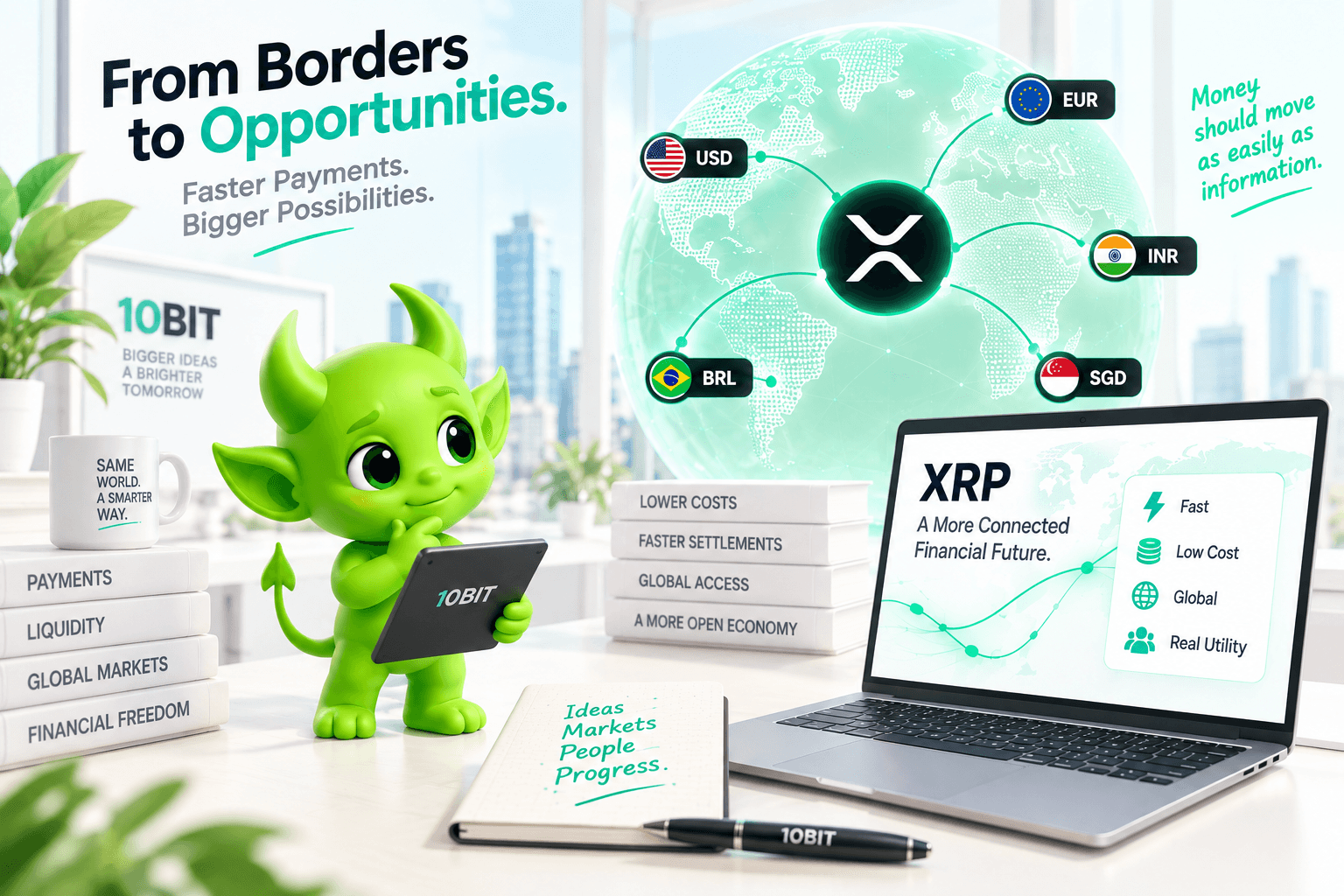
XRP was created with a straightforward goal : make moving money across borders as fast and seamless as moving information across the internet.
XRP Was Built to Solve a Real Banking Problem
Many cryptocurrencies were created to challenge traditional finance. XRP took a different approach. Instead of replacing financial institutions it aimed to improve how they move money.
International payments are surprisingly inefficient. When money moves between countries it often travels through a network of correspondent banks. Each intermediary adds time, cost and complexity. For businesses processing millions of dollars in transactions every day these delays become a genuine operational problem.
The vision behind XRP was straightforward create a digital asset that could act as a bridge between different currencies allowing money to move faster and more efficiently across borders. That idea eventually evolved into one of the largest payment-focused cryptocurrency ecosystems in the world.
How the XRP Ledger Works
Think of the XRP Ledger as a global settlement network. Whenever someone sends XRP the transaction is recorded on this ledger. Unlike traditional financial systems there's no need for multiple intermediaries to verify and settle the transfer.
Instead the XRP Ledger uses a network of validators that collectively agree on which transactions are valid through a consensus process.
The result is remarkable speed. While some blockchain networks may take several minutes to confirm transactions XRP transactions are typically finalized within seconds.
Cost is another major advantage. Transaction fees on the XRP Ledger are often measured in fractions of a cent. For users sending large amounts internationally these efficiencies are significant.
XRP Doesn't Use Mining. So Where Does Its Supply Come From?
One of the most misunderstood aspects of XRP involves how it works at a network level. Many investors assume all cryptocurrencies use mining. Bitcoin relies on Proof of Work. Many newer blockchains rely on Proof of Stake. XRP uses neither.
The XRP Ledger operates through its own consensus mechanism. Validators communicate and agree on the state of the network without computational competition.
All 100 billion XRP were created when the XRP Ledger launched. This is sometimes described as XRP being pre-mined although XRP has never used mining to issue new tokens.
No new XRP enters circulation through block rewards. There are no mining rewards. The supply structure was fixed from day one.
This approach also contributes to XRP's energy efficiency. Without large mining operations consuming electricity the network processes transactions with a relatively small environmental footprint.
Ripple vs XRP The Distinction That Actually Matters
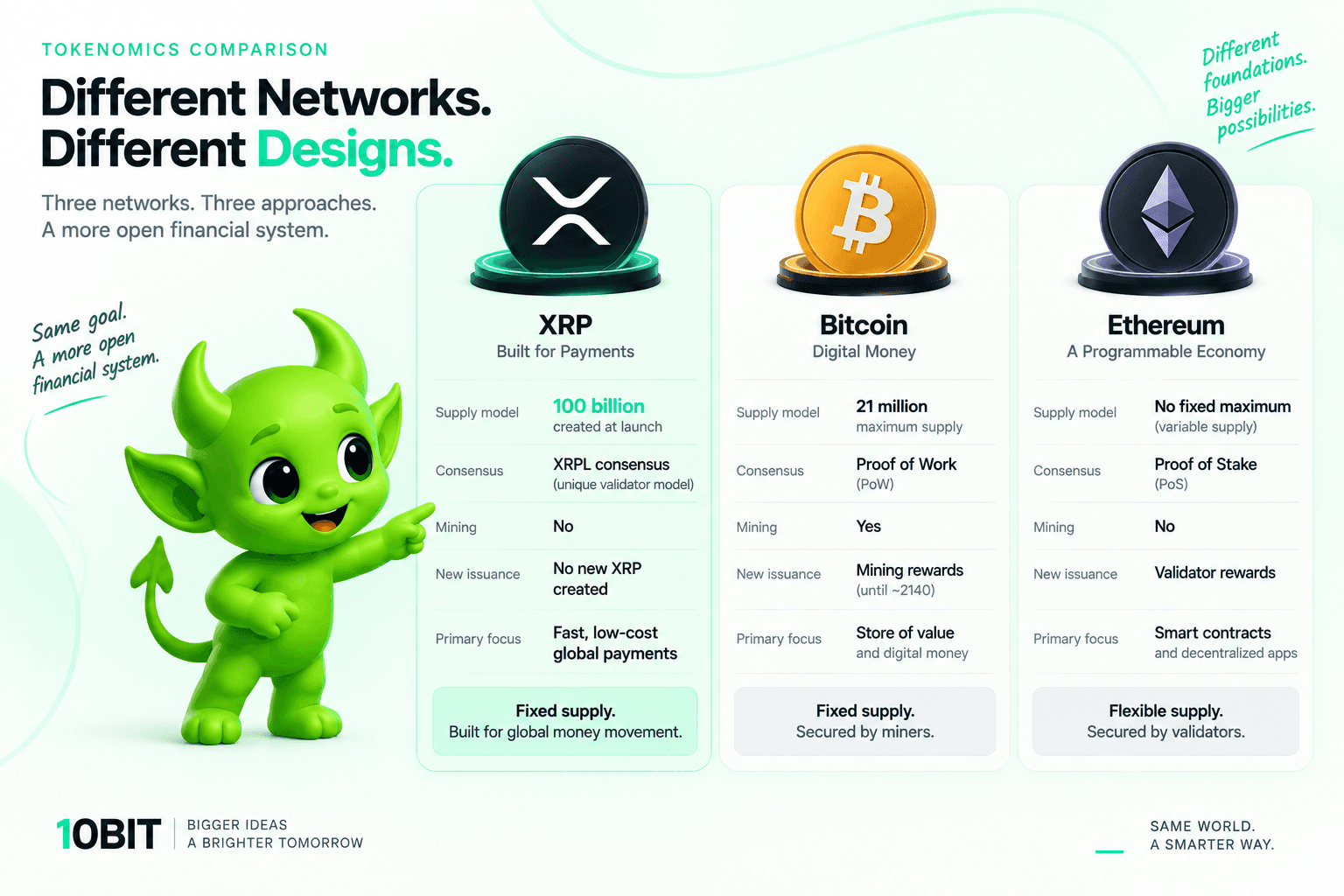
Ripple and XRP are closely connected, but their success isn't automatically linked. Ripple's payment infrastructure can move value using XRP, stablecoins or fiat depending on the payment flow.
So a new Ripple partnership doesn't automatically mean new demand for XRP. That's where the investment thesis gets more interesting.
The question for an XRP investor isn't simply whether Ripple's payment business grows. It's whether XRP remains economically important inside that growth.
XRP vs Bitcoin, Ethereum and Stellar
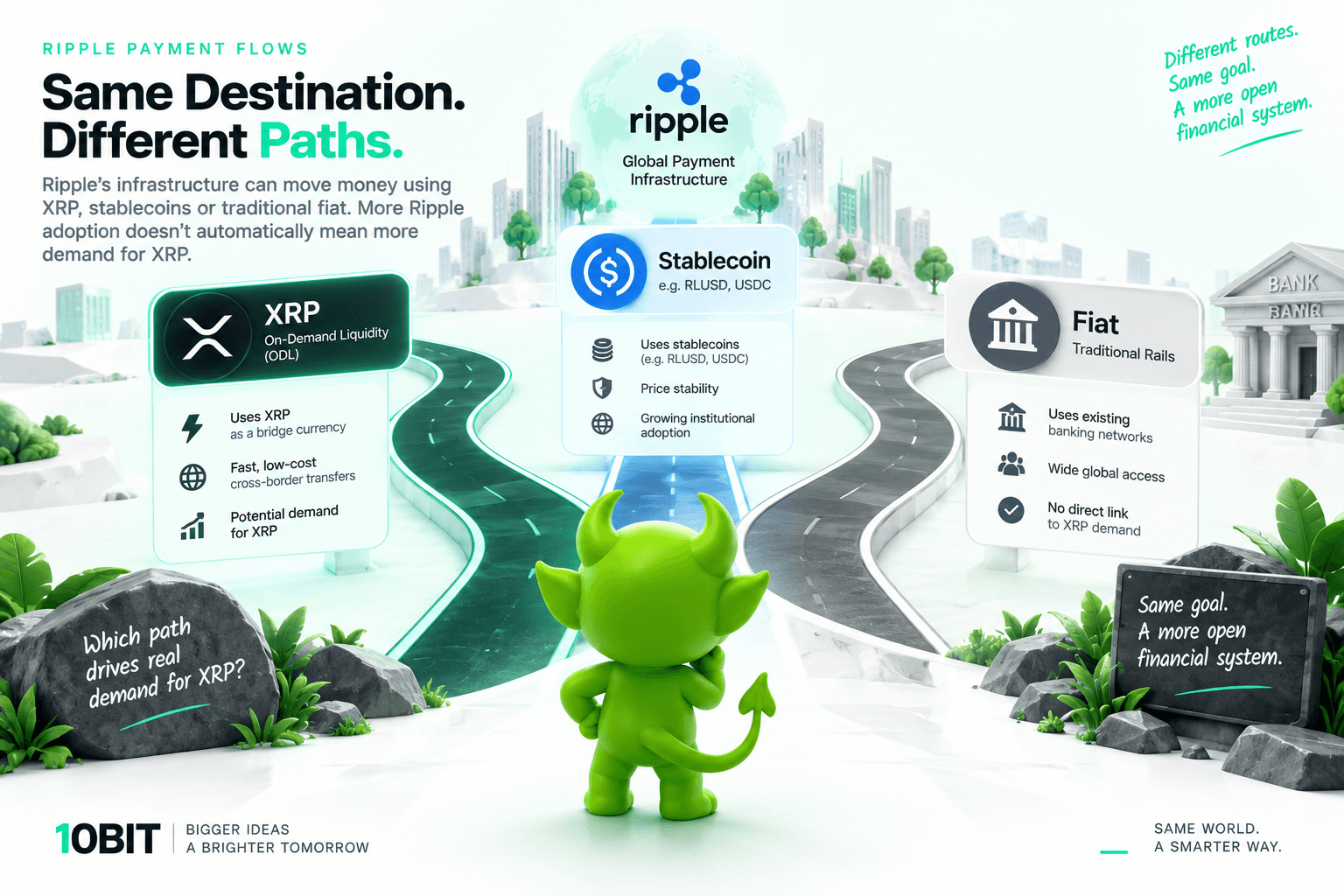
XRP is often compared with Bitcoin, Ethereum and Stellar, but they weren't built to solve the same problems.
Bitcoin was designed as decentralized digital money and is widely treated as a store of value. It prioritizes decentralization and security, while XRP is more focused on fast, low-cost payments and settlement.
Ethereum is primarily a smart-contract platform built for decentralized applications. XRP's core focus is much narrower: moving value efficiently.
Stellar is the closer comparison. Both networks focus heavily on payments and financial infrastructure, although they differ in ecosystem strategy, adoption and target markets.
The more useful question isn't which network is objectively better. It's what each network is designed to do and whether it can create lasting demand around that use case.
XRP Price History
Like most major cryptocurrencies XRP has experienced dramatic price movements. Its history includes periods of explosive growth, significant corrections, regulatory developments and shifting market narratives.
2017–2018 surge XRP saw its first major speculative boom during the broader crypto bull market, reaching what was then its all-time-high territory before falling sharply in the subsequent bear market.
2020 SEC lawsuit and aftermath the SEC’s case against Ripple became a major XRP-specific price narrative, contributing to exchange delistings/restrictions in the U.S. and years of regulatory uncertainty.
2023–2025 regulatory milestones and renewed highs XRP reacted strongly to major developments in the Ripple case, while the broader crypto bull market and improving regulatory clarity helped drive renewed interest and eventually a new phase of price discovery.
Because XRP's narrative is tied closely to payment infrastructure and institutional adoption news in those areas often attracts particular attention from the market.
What Has to Go Right
XRP's investment thesis rests on several things working out simultaneously.
XRP usage has to remain relevant as payment infrastructure evolves. The XRP Ledger needs continued activity. XRP has to capture economic value from that activity rather than stablecoins or other settlement assets taking the dominant role. Regulatory access needs to remain workable across key jurisdictions.
What Could Break the Thesis
Ripple grows its payments business while XRP usage doesn't follow. Stablecoins become the preferred bridge and settlement asset. Competing payment networks win distribution. XRPL activity doesn't translate into durable XRP demand. Broader crypto volatility overwhelms the utility narrative.
These are the scenarios worth understanding before forming a view not a bull case or bear case summary but the actual conditions that determine whether the investment thesis holds.
Risks Investors Should Understand
Regulatory uncertainty has historically been one of the biggest concerns surrounding XRP. Investor sentiment can shift quickly based on legal and policy developments. Centralisation concerns remain a topic of debate within the crypto community given Ripple's significant XRP holdings and influence over development direction.
Competition represents another challenge. Numerous blockchain projects are pursuing payment-related use cases, and stablecoins increasingly compete for the same settlement function XRP was designed to serve.
Market volatility adds further risk. Anyone considering XRP should understand these factors clearly before making a decision.
How to Buy XRP in India
For investors wondering how to buy XRP in India the process is relatively straightforward. Most cryptocurrency exchanges allow users to create an account, complete KYC verification, deposit INR and purchase XRP directly.
Before investing users should review platform security measures, transaction fees and applicable tax obligations.
India currently taxes gains from virtual digital assets at 30% plus applicable surcharge and cess under Section 115BBH of the Income Tax Act. Understanding your obligations before you invest is as important as understanding the asset itself.
How to Store XRP Safely
Many users choose software wallets for convenience and accessibility. Others prefer hardware wallets which store private keys offline and provide additional protection against online threats.
Long-term investors often use hardware wallets for larger holdings while maintaining smaller balances in hot wallets for everyday use.
Regardless of the method chosen protecting recovery credentials remains essential. For a full breakdown of how crypto wallets work and the difference between custodial and self-custody storage read our crypto wallets guide.
10BIT | Take
XRP has one of the clearest use cases in crypto making cross-border payments faster and cheaper. The more interesting question isn't whether that use case is real. It clearly is.
The question is whether XRP the asset captures value from it in a world where Ripple's own payment infrastructure also supports fiat and stablecoins alongside XRP.
Ripple can grow. XRPL can grow. And XRP's economic role in that growth can still be smaller than investors assumed. That's not an argument against XRP. It's an argument for understanding what you're actually betting on when you buy it. You're not just betting on Ripple. You're betting on XRP specifically remaining the preferred settlement asset in payment flows where alternatives exist.
That's a more specific thesis than "Ripple partnerships are bullish for XRP."
Things You May Have Missed
XRP's regulatory history has been unusually significant even by crypto standards.
The SEC sued Ripple in 2020 over XRP sales. The case ultimately produced an important distinction: the court found Ripple's institutional XRP sales violated securities law, while certain programmatic sales on exchanges did not.
The SEC and Ripple dismissed their respective appeals in August 2025, resolving the civil enforcement action. The district court's final judgment — including a roughly $125 million civil penalty and an injunction concerning future institutional sales — remained in effect.
That history doesn't determine whether XRP is a good investment. But it shows why regulatory developments have played such an unusually large role in XRP's story.
Related Post

Sep 7, 2026
Bitcoin vs Ethereum: what's actually different? Compare their purpose, supply, technology, use cases and risks — and understand what each was built to do.

Sep 16, 2026
Tokenization is bringing property, gold and financial assets on-chain. Learn how it works, enables fractional ownership, and what a token actually represents.

Sep 5, 2026
Learn how altcoins differ from Bitcoin, the major types, examples, risks, Bitcoin dominance and what an altcoin season actually means.