You Bought Crypto. Now Where the Hell Do You Keep It Safely?

Lofi | 10BIT

How to Store Crypto Safely in a Nutshell (TL;DR)
Crypto isn't literally stored inside a wallet. Your assets remain recorded on the blockchain while your wallet manages the keys that allow you to access and control them.
Hot wallets stay connected to the internet and prioritize convenience. Cold wallets keep private keys offline and prioritize security. And if you leave crypto with a centralized exchange, the exchange generally controls the keys on your behalf.
There isn't one perfect storage method. The right setup depends on how often you use your crypto, how much responsibility you're prepared to take on and what risks you're trying to protect against.
Key Takeaways
Your recovery phrase can be more important than the device itself. Lose a hardware wallet and you may be able to recover access. Lose the recovery phrase without another recovery method and the situation can be very different.
Convenience and control are a trade-off. Exchanges and hot wallets are easier to use. Self-custody and cold storage give you greater control but greater responsibility too.
Most crypto security failures don't require someone to hack the blockchain. Phishing, fake apps, compromised devices and exposed recovery phrases can be enough.
Hot Wallets, Cold Wallets and Self-Custody
Buying crypto takes five minutes.
Losing it can take five seconds.
Click the wrong link. Download a fake wallet. Give someone your recovery phrase. Leave your holdings on a platform that eventually collapses. The blockchain might be secure. That doesn't automatically mean your crypto is.
And this is where crypto becomes very different from a bank account. Depending on how you store it there may be no bank to call, no password reset and no transaction reversal if something goes badly wrong.
So before worrying about what coin could go up next, understand something far more basic.
Who actually controls your crypto and how do you keep that control? That's what this guide is about.
Why Storing Crypto Safely Matters
This part most beginners skip. Don't.
In traditional banking if you lose access to your account you can usually contact the bank, reset your password or block suspicious activity.
Cryptocurrency does not work like that.
Crypto is decentralized. There is no central authority controlling your funds. You are entirely responsible for your own security. If someone gains access to your wallet or private keys they can transfer your crypto instantly and those transactions usually cannot be reversed.
This is why people have lost everything from simple mistakes -
Forgetting their recovery phrase. Storing credentials carelessly. Using fake wallet apps. Falling for phishing scams. Leaving funds on risky exchanges.
Unlike traditional finance there is often no second chance in crypto. That is why understanding how to store crypto safely should be a priority for every investor before anything else.
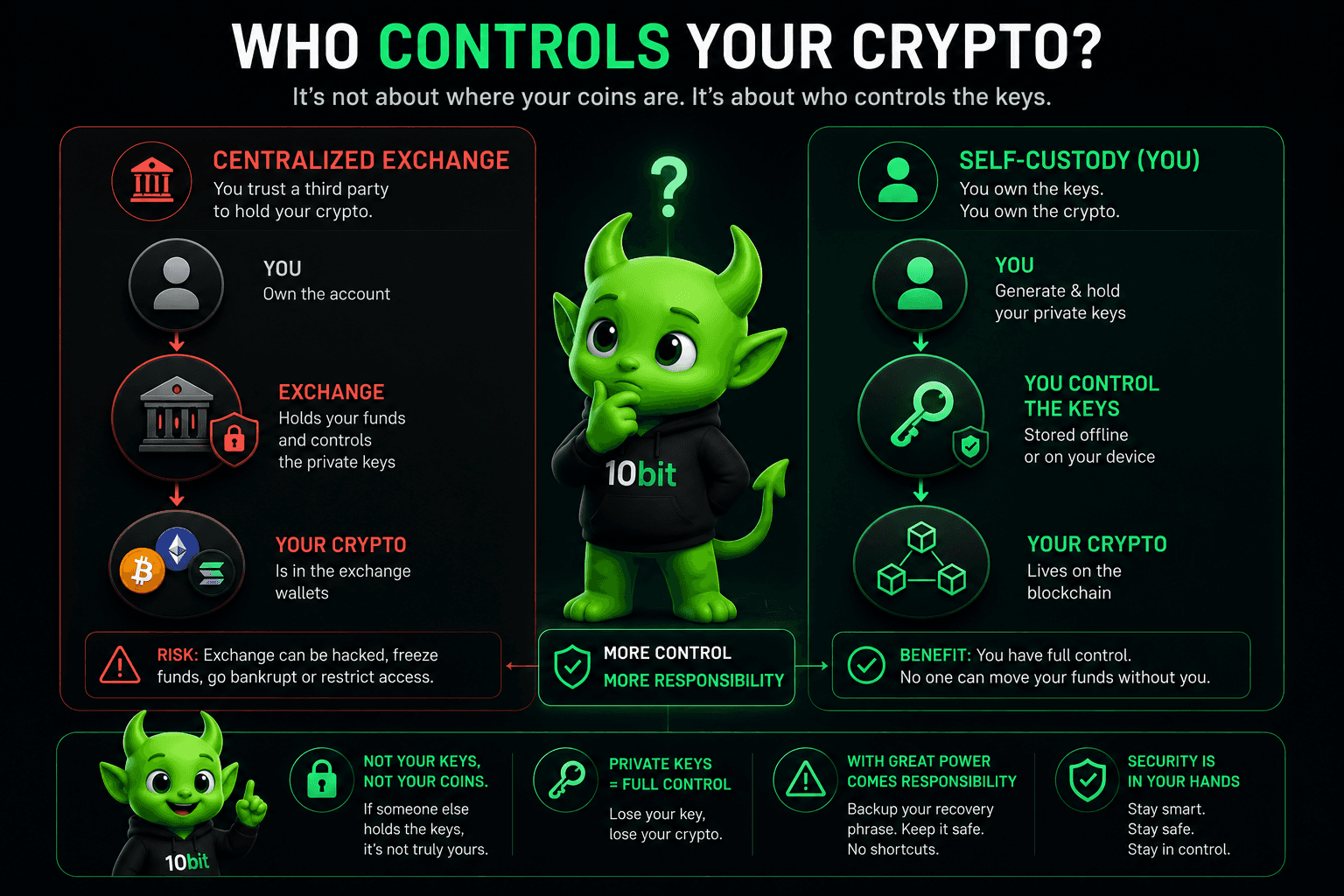
Who Actually Controls Your Crypto?
Before you understand hot vs cold wallets understand this framework first. Everything else makes more sense after it.
There are three situations when it comes to who controls your crypto —
Exchange Custody
The exchange controls the private keys. You have an account with them. You trust their security and operations to give you access to your assets.
Self-Custody Hot Wallet
You control the keys. Your wallet is connected to the internet. More control than an exchange but more exposure to online threats.
Self-Custody Cold Wallet
You control the keys. Your keys remain offline. Maximum control and maximum responsibility.
Crypto storage is not really about where the coins are. It is about who controls the keys. That is the sentence worth remembering after reading this entire article. Understanding Crypto Storage Methods Not all wallets are equal. Here is what actually differs.
There are two major categories of crypto storage — hot wallets and cold wallets.
The difference is mainly about internet connectivity and the security that comes with it. Hot wallets are connected to the internet. Cold wallets keep private keys offline. Both have advantages and disadvantages depending on how you use your cryptocurrency.
What Is a Hot Wallet?
A hot wallet is any crypto wallet connected to the internet. Designed for convenience and quick access. Hot wallets come as mobile apps, browser extensions, desktop software and exchange wallets.
Most beginners start with hot wallets because they are easy to set up and simple to use. If you want to buy crypto quickly, send funds to someone or trade regularly a hot wallet provides easy access.
The biggest advantage is convenience. Access your crypto anytime from your phone or computer. The trade-off is exposure. Since hot wallets stay connected to the internet they are more vulnerable to hacking, phishing attacks, malware and fake applications.
Hot wallets are not inherently unsafe. But storing large amounts in them for long periods introduces risk that cold storage avoids.
What Is a Cold Wallet?
A cold wallet keeps private keys offline. Disconnected from the internet means significantly less exposure to online attacks.
The most popular type is the hardware wallet — a physical device that stores your private keys offline. Think of it as a secure digital vault for your crypto credentials.
Cold storage is widely used by long-term investors who prioritize security over convenience. If you are holding Bitcoin for five or ten years moving it into cold storage reduces the risk of online theft significantly.
One important nuance — cold storage keeps the private keys used to control your crypto offline. Your cryptocurrency itself remains recorded on the blockchain. The wallet does not hold the coins. It holds the keys.
Hot Wallet vs Cold Wallet: Which Is Better?

Neither is universally better. Both serve different purposes.
Hot wallets are Popular hot wallets include software wallets such as MetaMask and Phantom, although features and supported networks vary between wallets.
Cold wallets are Hardware wallets from companies such as Ledger and Trezor are common examples of devices used for cold storage.
A simple way to think about it — a hot wallet is like carrying cash in your pocket. A cold wallet is like storing valuables in a safe.
Many experienced investors use both. Small amounts in hot wallets for regular use. Larger amounts in cold storage for security.
How Hardware Wallets Work
Your private keys are the credentials that give access to your cryptocurrency. Whoever controls the private keys controls the crypto.
A hardware wallet keeps those keys offline making it significantly harder for hackers to reach them. Even if your computer becomes infected with malware a hardware wallet adds another layer of protection because transactions require physical confirmation on the device itself.
However hardware wallets are not automatically the safest option for everyone. Someone who loses their recovery phrase, buys a compromised device or handles self-custody badly can still lose access to their crypto.
More control does not automatically mean more safety. Security is also about the person using it.
Why Your Recovery Phrase Is Everything
When setting up a crypto wallet you are given a recovery phrase — usually 12 or 24 words that act as the master backup for your wallet.
Your recovery phrase can restore access to your crypto if your wallet device is lost, damaged or stolen. But here is what matters most — anyone who has your recovery phrase can access your crypto.
Lose your hardware wallet — you may be able to recover access with your recovery phrase.
Lose your recovery phrase without another recovery method — the situation can be very different.
Protect the phrase as seriously as you protect the wallet itself.
What Is Self-Custody Crypto?
Self-custody means you personally control your cryptocurrency and private keys instead of relying on a third party.
When using a self-custody wallet you have complete ownership and control. No exchange or company can freeze your funds or control your transactions.
But self-custody also means you are fully responsible for your own security. There is no forgot password option if you lose your recovery phrase.
Is It Safe to Store Crypto on an Exchange?
The part most beginner guides skip. We will not.
Exchanges are useful for buying, selling and short-term storage. But leaving large amounts on exchanges for long periods introduces a different type of risk.
When you store crypto on a centralized exchange the platform generally controls the private keys. You are trusting their security, operations and continued ability to give you access to your assets.
History has shown that even major exchanges can experience security breaches, frozen withdrawals and platform failures no matter how thor like defense they claim.
This is why the phrase exists —
Not your keys, not your crypto. For short-term trading exchanges may be acceptable. For long-term investing many people prefer cold wallet solutions and self-custody methods.
There is also an important distinction worth understanding —
A decentralized exchange works differently. You generally do not deposit crypto into a DEX wallet. Instead you connect a compatible self-custody wallet and interact with the protocol directly from that wallet.
Understanding the difference between CEX custody and self-custody is one of the most important concepts in crypto security.
Multi-Signature Wallets: Advanced Security
As crypto holdings grow some users explore multi-signature wallets.A multi-signature wallet requires more than one approval before transactions can be authorized.
For example — approval from a phone, confirmation from a hardware wallet and access to a secondary backup key.
This reduces theft risk because hackers would need multiple devices or credentials to access funds. Multi-signature wallets are commonly used by businesses, crypto funds and investors holding large amounts.
Beginners do not need this immediately but understanding that it exists matters as your holdings grow.
Common Mistakes That Actually Cost People Money
These are the ones that actually cost people money.
Sharing a recovery phrase with someone claiming to be customer support. Legitimate companies will never ask for your recovery phrase. Ever.
Downloading fake wallet applications. Scammers create apps that look identical to real wallets specifically to steal private keys.
Failing to back up wallet information. If your device is lost or damaged without backups your crypto may become permanently inaccessible.
Ignoring basic security practices. Strong passwords, two-factor authentication and keeping software updated are basic but effective.
Most crypto losses happen because of human error not sophisticated hacking. The blockchain is not the weak point. The person using it often is.
10bit Take
Crypto has an unusual relationship with freedom.
The more control you take away from banks, exchanges and other intermediaries the more responsibility eventually lands on you. That is the part people sometimes leave out when talking about self-custody.
Owning your keys means nobody else needs to give you permission to access your crypto. But it can also mean nobody else can save you when you make a mistake. There is no perfect wallet and no storage method that removes every risk.
An exchange asks you to trust the exchange.
A hot wallet asks you to secure an internet-connected environment.
Cold storage asks you to protect your keys and recovery method yourself.
So the real question is not simply what is the safest crypto wallet. It is — which risks am I willing and capable of managing myself?
That is what owning crypto eventually comes down to.
Still Got Questions? FAQs
What happens if I lose my hardware wallet?
Your crypto does not disappear because the physical device disappears. Your assets remain recorded on the blockchain. If you still have your recovery phrase you can generally restore access using a compatible wallet. The device matters. Your keys matter more.
Is a cold wallet always safer than a hot wallet?
Not automatically. Cold storage keeps private keys away from internet connected environments which reduces certain online attack risks. But someone who loses their
recovery phrase or handles self-custody badly can still lose access to their crypto. Security is not just about the wallet. It is also about the person using it.
Related Post

Aug 12, 2026
Your crypto isn't actually inside your wallet. Here's what a crypto wallet really stores, how private keys and recovery phrases work, and how to keep your assets secure.

Aug 18, 2026
Learn how to buy crypto step by step, from choosing an exchange and making your first purchase to understanding wallets, fees and security.

Aug 10, 2026
Bitcoin didn't just create digital money. It removed the middleman completely. Here's what it actually is, how mining works, and why it still matters in 2026.