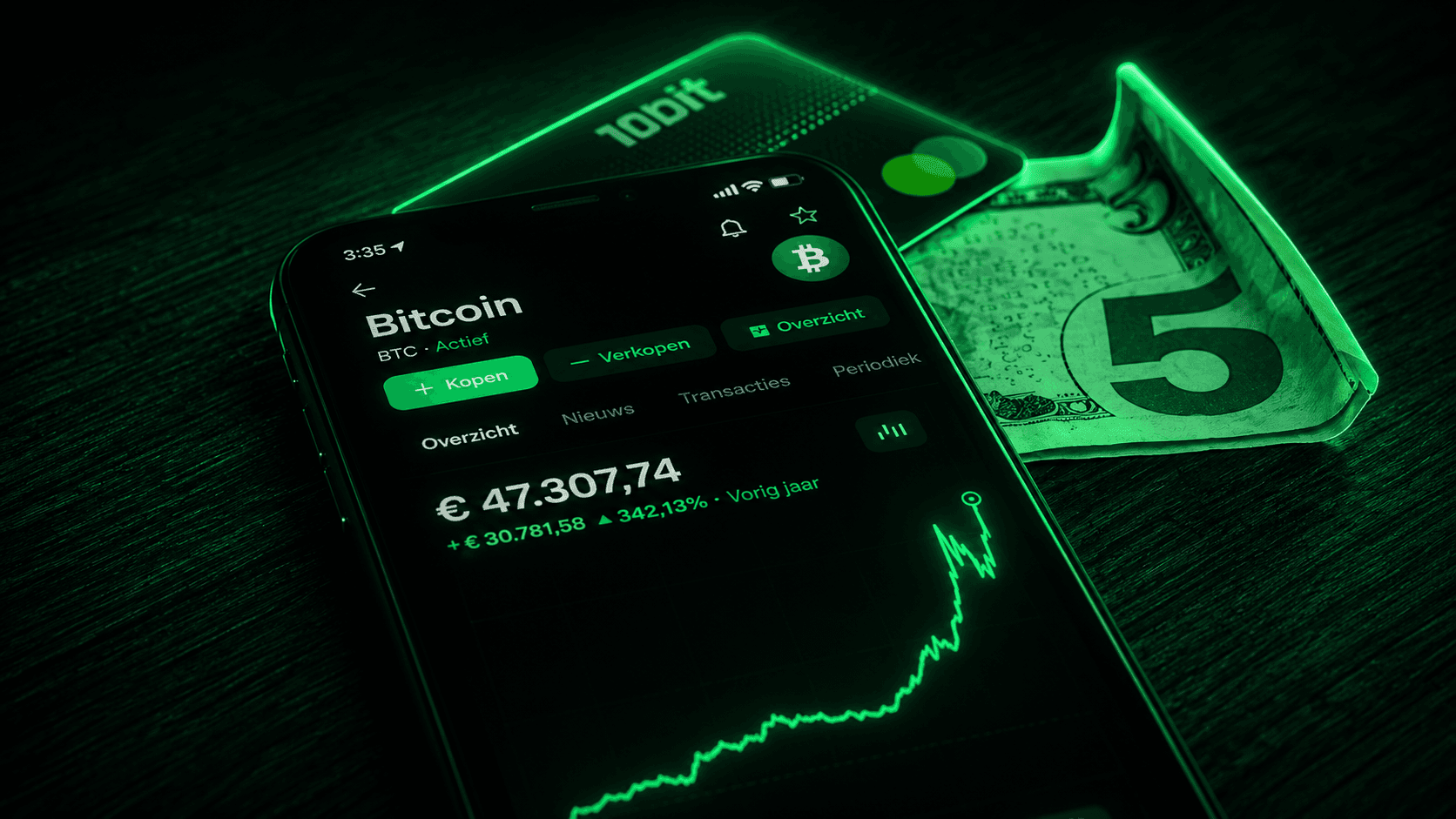
The f*ck is bitcoin and how does it work? Does it even matter?
Bitcoin didn't just create digital money. It removed the middleman completely. Here's what it actually is, how mining works, and why it still matters in 2026.

10bits
Bitcoin: Money changed in a nutshell
Money has always had a middleman. A bank to hold it. A government to print it. A payment network to move it. And all of them taking a cut, setting the rules, and deciding who gets access.
Then 2008 happened. A financial crisis that exposed exactly how fragile that system was. And someone asked a simple question. What if you didn't need any of them?
That question became Bitcoin.
Bitcoin made 2008 crisis hit people imagine: what if you didn't need any of them?
Bitcoin did not just introduce digital money. It introduced a completely new financial system. One where value can be transferred directly between people, anywhere in the world, using only the internet.
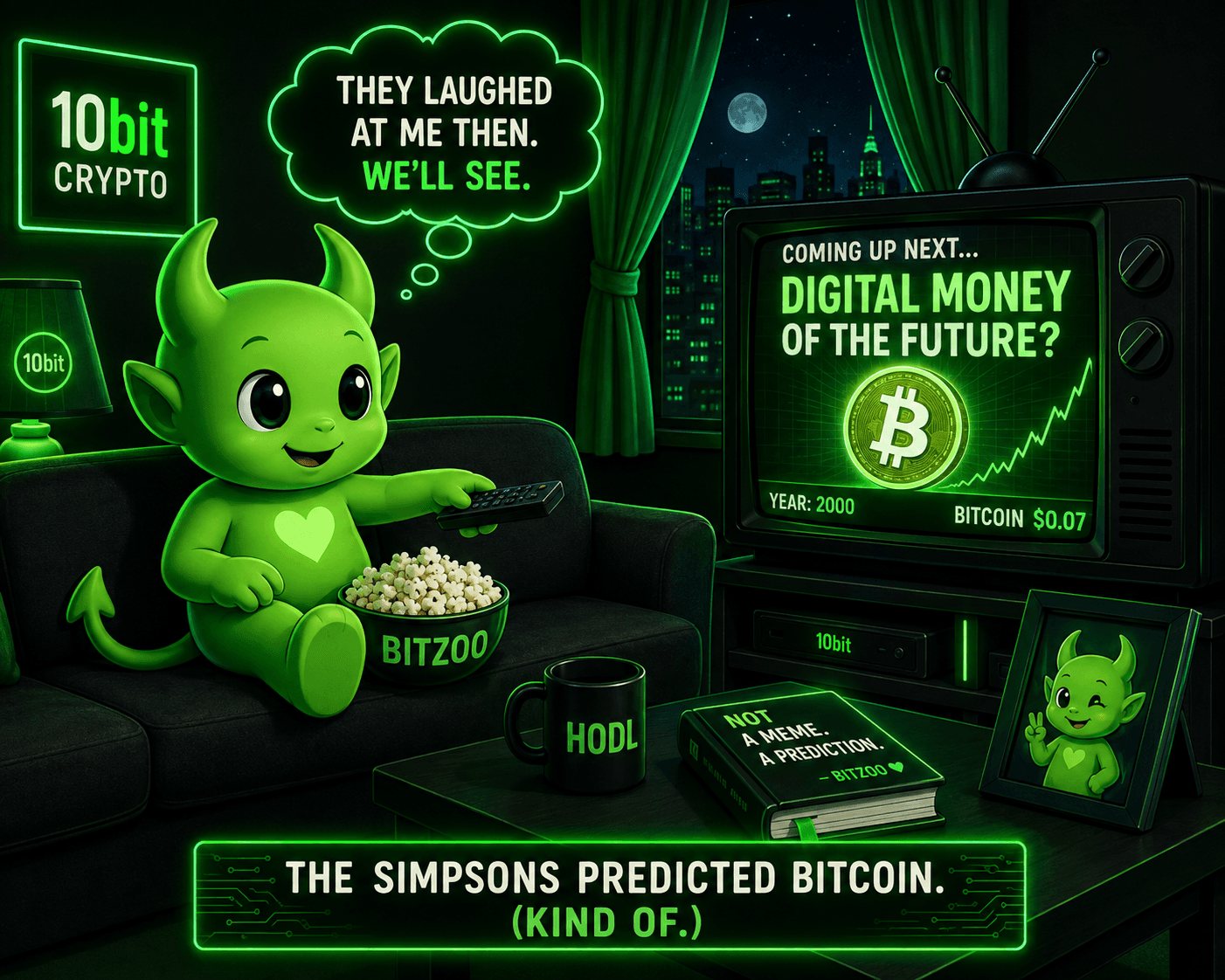
Interestingly, even pop culture hinted at something like this long before it became mainstream. Shows like The Simpsons made references to digital currencies and decentralized systems years before the world began to understand them.
So, what the f*ck actually is Bitcoin? Why does something entirely digital have value? How does mining create Bitcoin? And does any of this really matter?
Key Takeaways
Bitcoin is the first money that nobody owns, nobody controls, and nobody can shut down. That's not a feature. That's the whole point.
Mining isn't just how new Bitcoin gets created. It's how the entire
network stays honest without anyone in charge.Only 21 million Bitcoin will ever exist. No government can change that. No company can vote to print more. That scarcity is built into the code permanently.
What Is Bitcoin
No bank. No government. No permission. Here's how it actually works.
Bitcoin is a decentralized currency that exists entirely in digital form. It is not printed, issued, or controlled by any government. Instead, it operates on a global network of computers that collectively maintain and verify transactions.
At its core, Bitcoin is a peer to peer electronic system that allows people to send and receive value directly. This means you do not need a bank to transfer money. You can send Bitcoin to anyone, anywhere, at any time. Bitcoin also functions as a medium of exchange. You can use it to pay for goods and services, although today it is more commonly used as a store of value.
Ownership in Bitcoin is determined by cryptography. Each user has a bitcoin address, which works like a public account number, and a private key, which acts like a password. The private key gives you complete control over your funds.
If you control the private key, you control the Bitcoin.
Who Created Bitcoin
Bitcoin was created by Satoshi Nakamoto. But here is what makes the story even more fascinating. No one knows who Satoshi Nakamoto actually is. It could be a single person or a group of people. Despite years of investigation, the identity remains unknown.
In 2008, Satoshi released the Bitcoin white paper, a document titled “Bitcoin: A Peer-to-Peer Electronic Cash System.” This paper explained how Bitcoin would work and why it was needed. It introduced the idea of removing intermediaries and creating a trustless system.
In 2009, Satoshi launched the Bitcoin network and mined the first block, known as the genesis block. After a few years of development and communication with early adopters, Satoshi disappeared, leaving the project in the hands of the global community.
This anonymity is one of Bitcoin’s most unique features. It reinforces the idea that Bitcoin is truly decentralized and not controlled by any individual.
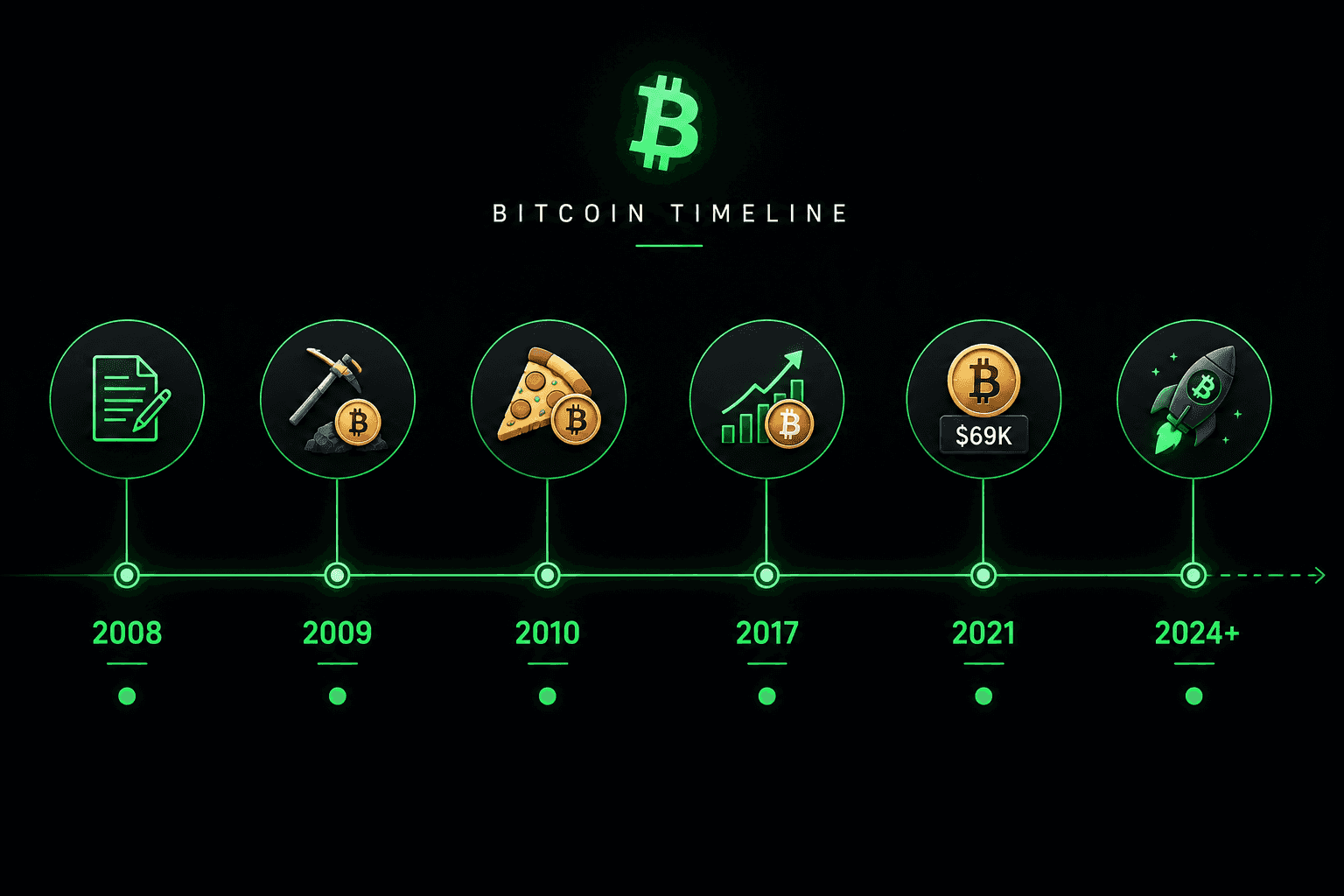
History of Bitcoin
Bitcoin’s journey from a niche experiment to a global asset is one of the most remarkable developments in modern finance.
In 2008, the white paper was published, introducing the concept of decentralized digital money. In 2009, the Bitcoin network went live. At that time, Bitcoin had no real market value. In 2010, one of the first real-world transactions took place. A developer paid 10,000 Bitcoin for two pizzas. Today, that amount would be worth hundreds of millions of dollars, making it one of the most famous transactions in crypto history.
In the early years, Bitcoin was mainly used by developers and technology enthusiasts. It slowly gained traction as more people began to understand its potential.
By 2013, Bitcoin crossed $1,000 for the first time, attracting global attention. In 2017, it entered mainstream awareness as its price surged close to $20,000. In 2021, Bitcoin reached an all-time high of around $69,000, with institutional investors, hedge funds, and corporations entering the market.
Today, Bitcoin is widely recognized as a major financial asset and continues to grow in adoption crossing the $100,000 mark.
How Bitcoin Works
Bitcoin operates on a technology called blockchain.
A blockchain is a digital ledger that records all transactions. This ledger is distributed across thousands of computers, making it highly secure and transparent.
When you send Bitcoin, the transaction is broadcast to the network. Instead of being processed by a bank, the transaction is verified by participants in the network. Once verified, it is added to a block and recorded permanently on the blockchain.
Each transaction is linked to a bitcoin address, which acts as a unique identifier. Because the system is decentralized, there is no central point of control. This reduces the risk of fraud and censorship.
The network operates 24 hours a day, seven days a week, without interruptions.
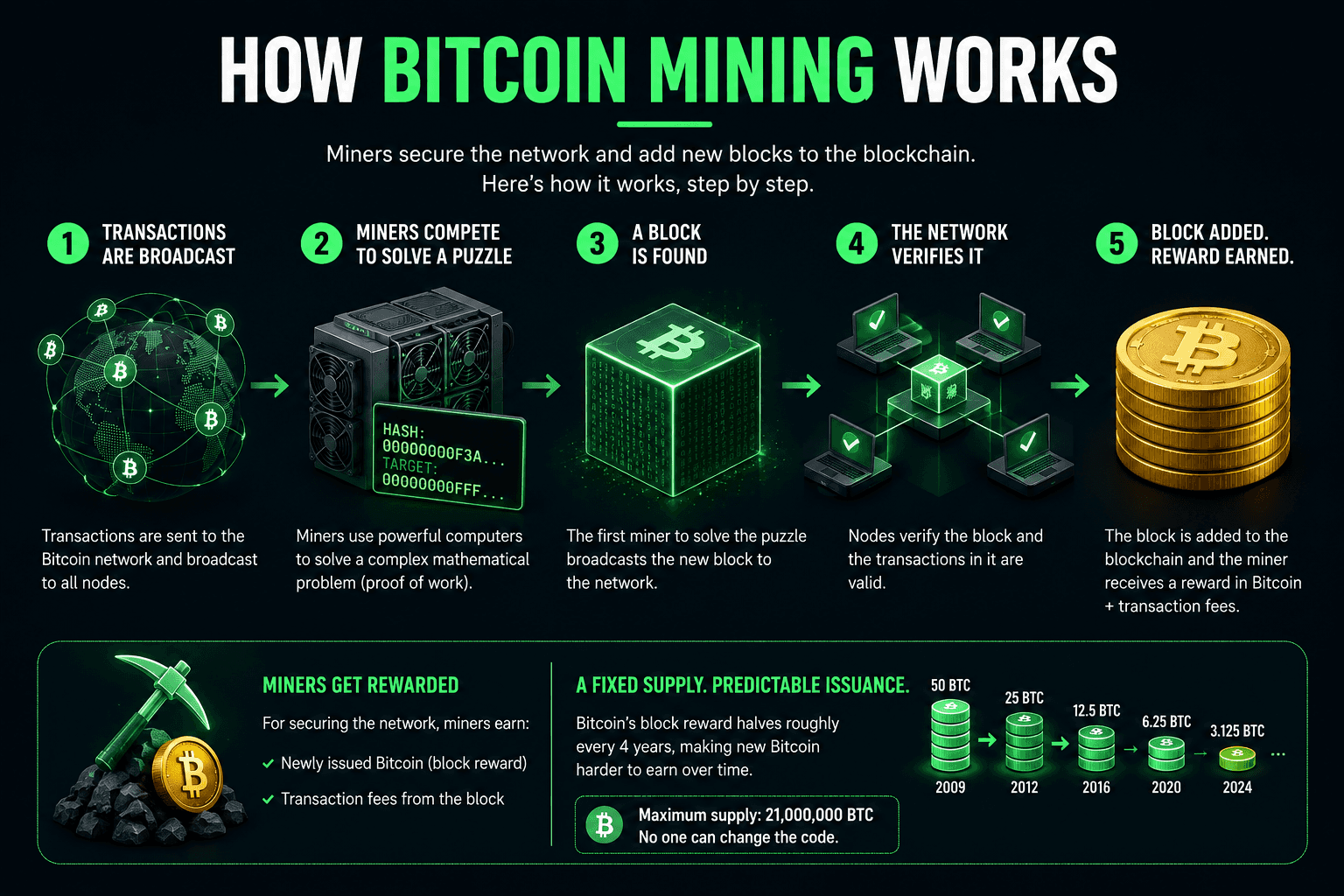
What Is Bitcoin Mining - This is the part most people skip. Don't.
Bitcoin mining is the process that powers the network. Miners use powerful computers to solve complex mathematical problems. This process validates transactions and adds them to the blockchain.
In return, miners are rewarded with newly created Bitcoin.
This is how new Bitcoin enters circulation.
Mining also plays a critical role in maintaining the security of the network. It ensures that transactions are verified and that the system remains decentralized.
The total bitcoin supply is limited to 21 million coins. This scarcity is built into the system and cannot be changed. As of today, more than 19 million Bitcoin have already been mined, meaning only a limited amount remains to be created.
This controlled supply is one of the reasons why Bitcoin is considered valuable.
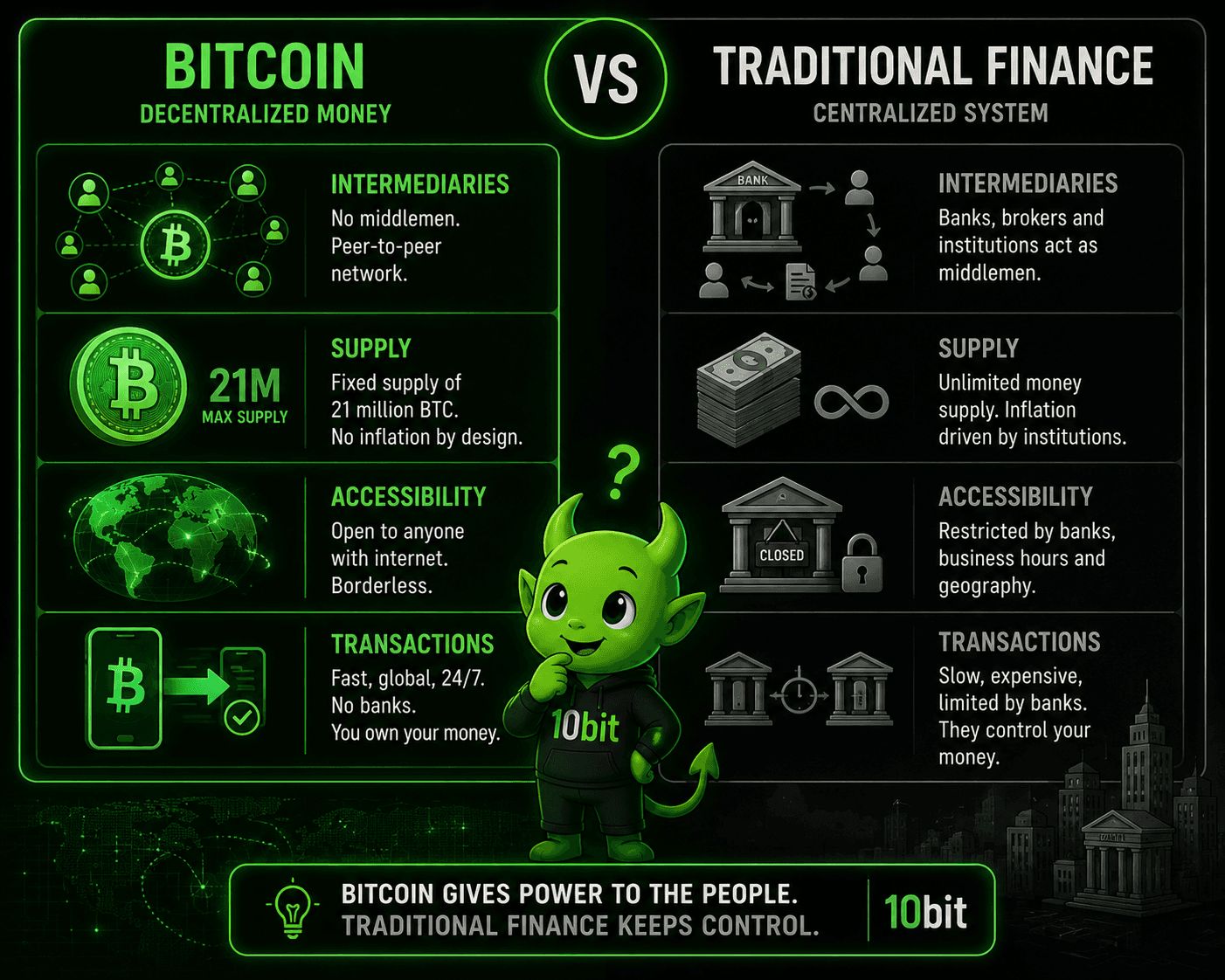
Bitcoin vs Traditional Finance
The system you grew up with has a bank in the middle of every transaction. Bitcoin removes that entirely. No intermediaries. No business hours. No one who can freeze your account or decide your money isn't yours anymore. The infographic below breaks down exactly how different these two systems are across supply, access, and control.
Use Cases of Bitcoin
Bitcoin is used in several ways today.
One of the primary use cases is as a store of value. Many investors treat Bitcoin as digital gold and hold it for long periods.
Another use case is payments. Bitcoin can be used to send money globally without relying on banks. This is particularly useful for cross-border transfers.
For example, traditional international transfers can take days and involve high fees. Bitcoin transactions can be completed much faster.
Bitcoin is also used in regions with limited access to banking services. It provides a way for people to store and transfer value without needing a bank account.
These use cases continue to expand as adoption grows.
Why Bitcoin Matters
Bitcoin is more than just a currency.
It represents a shift in how people think about money and financial systems. It offers financial independence by allowing individuals to control their own funds. It provides an alternative to fiat systems, especially in times of economic uncertainty.
Bitcoin’s decentralized nature makes it accessible to anyone with an internet connection. This makes it one of the most inclusive financial systems ever created.
10BIT take
Here's what most people miss about Bitcoin.
It was never really about the price. The price is just the part that gets headlines. What actually matters is what Bitcoin proved — that for the first time in human history, you can own something digital that nobody can copy, confiscate, or inflate away.
Banks can freeze your account. Governments can devalue your currency.
Bitcoin's code doesn't care who you are or what anyone thinks about it.That's either terrifying or liberating depending on how you look at it and build from here on out.
Where Bitcoin goes from here nobody knows. But the idea it introduced isn't going away. Money doesn't need a middleman anymore.That's already true. The rest is just the world catching up.
Things you may have missed
Most people think Bitcoin's value comes from speculation. The more interesting argument is that it's the first time in history humans created something genuinely scarce in the digital world.
You can copy an image. You can copy a document. You cannot copy a Bitcoin. The network won't allow it. That's not a small idea.
That's a completely new concept that didn't exist before 2009.
Still got questions? FAQs for you
Can Bitcoin be destroyed or shut down by governments?
Technically no. To shut down Bitcoin you'd have to shut down every computer running the network simultaneously across every country. Governments can ban exchanges, restrict trading, and make it harder to use. They can't kill the network itself. Several have tried. Bitcoin is still running. And there will always be adopters for new innovation for it to exist.
What happens when all 21 million Bitcoin are mined?
No new Bitcoin gets created. Miners stop earning block rewards and only earn transaction fees instead. This is expected around 2140. Whether that's a problem or not depends on how much Bitcoin is being used by then. The network doesn't stop. The economics just shift. Some say it will end up pumping to la la land given the scarcity but time shall only tell.
Is it too late to invest in Bitcoin?
Depends what you mean by late. If you mean "will I get 10,000x returns like 2010 early adopters" — probably not. If you mean "is there still upside in an asset with fixed supply and growing institutional adoption" — that's a different question. Nobody knows the answer. Anyone who tells you they do is selling something. Do your own research before putting money in. And make sure you have an exit plan.