What Is TRON Crypto? Why TRX Is More Than a Payment Token
TRON wanted to reinvent the internet. Instead, it became a major highway for digital dollars. Here's how TRX works, why USDT matters and what investors should question.

Lofi | 10BIT
TL;DR
TRON evolved from a content-focused vision into a stablecoin network. Its blockchain supports payments, decentralized applications and significant activity involving USDT transfers.
TRX powers a resource-based blockchain. TRON uses Delegated Proof of Stake, 27 active Super Representatives and a Bandwidth-and-Energy system to process transactions and run smart contracts.
Network adoption isn't the same as investment returns. TRX has utility through staking, governance and transaction resources, but stablecoin usage must translate into sustainable token demand for the investment thesis to strengthen.
What Is TRON? The Blockchain That Found Its Purpose in Stablecoins
Imagine you're a musician. You upload a song to a platform. Millions of people listen to it. The platform takes a significant share of the revenue, controls how your work is distributed and can change the rules whenever it wants.
What if creators could reach their audiences without handing so much control to intermediaries?
That was part of TRON's original ambition: a decentralized internet where creators could own and distribute their content more freely. But something interesting happened along the way.
TRON became known less for revolutionizing entertainment and more for moving digital dollars around the world.
Today, its role in stablecoin transfers, particularly USDT, is central to understanding the network.
And that raises a different question for investors: if TRON becomes increasingly useful, does that necessarily make TRX more valuable?
What Is TRON Crypto?
TRON is a public blockchain designed to support digital asset transfers, smart contracts and decentralized applications. Its native cryptocurrency is TRX, which plays several roles in the network.
Network resources: TRX can be staked to obtain Bandwidth and Energy, which help users pay for transaction processing and smart contract execution.
Staking and governance: Staked TRX provides voting power used to elect network representatives.
Economic utility: TRX can be burned when users need transaction resources that aren't covered by their available allowances.
TRON is not the same thing as TRX. TRON is the blockchain infrastructure. TRX is the native token used within that infrastructure. It's a distinction worth remembering when evaluating any cryptocurrency. A useful network and a valuable token are related ideas, but they're not interchangeable.
How Does the TRON Network Work?
TRON uses a resource model that differs from the familiar gas-fee structure found on Ethereum. Instead of treating every transaction as a straightforward fee payment, TRON accounts for two important resources.
1. Bandwidth : Bandwidth measures the data size of a transaction. Ordinary transfers and smart contract interactions consume Bandwidth because their information must be recorded on the blockchain.
2. Energy : Energy measures the computing resources required to execute smart contracts. A simple TRX transfer and a USDT transfer aren't necessarily equivalent. USDT on TRON typically uses the TRC-20 token standard, which involves smart contract execution and therefore Energy consumption.
3. TRX staking and resource costs : Users can stake TRX to obtain network resources. Resources may also be delegated by other accounts. When available resources are insufficient, the network can burn TRX to cover the relevant costs.
This is why describing TRON transactions as universally free would be misleading. The network can offer efficient transfers, but the actual cost depends on the transaction, available resources and network parameters.

How Does TRON's Delegated Proof of Stake Work?
TRON doesn't rely on Bitcoin-style mining. It uses Delegated Proof of Stake (DPoS), a consensus system in which token holders participate in selecting the network's block producers.
Here's the basic structure:
Stake TRX: Token holders stake TRX to receive TRON Power, which represents voting rights.
Vote for representatives: Participants use those votes to support Super Representative candidates.
Produce blocks: The 27 highest-ranked candidates become active Super Representatives responsible for producing blocks.
Maintain the network: Representatives also participate in governance decisions concerning network parameters.
The design supports relatively fast block production and coordinated network operation. But there's a trade-off.
Only 27 representatives actively produce blocks at a time. That creates a more concentrated validator structure than networks with much broader participation.
The question isn't simply whether TRON can process transactions efficiently. It's also how much decentralization users and investors are willing to trade for that efficiency.
Why Has TRON Become Important for USDT Transfers?
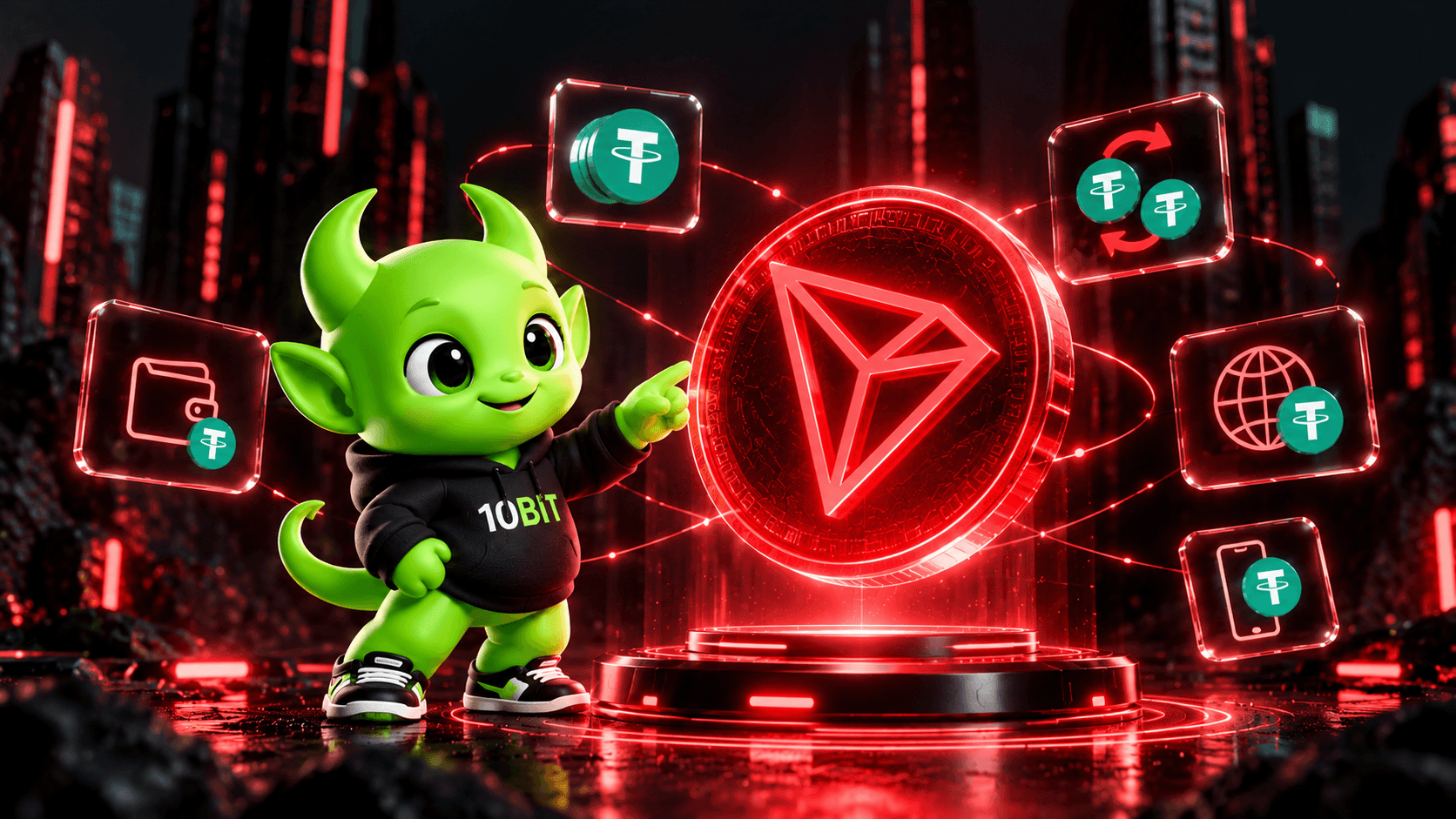
TRON has become a major network for USDT, Tether's dollar-pegged stablecoin, thanks to its efficient transaction infrastructure and widespread support across wallets and exchanges.
Here's where TRON's stablecoin ecosystem proves useful:
Moving dollar-linked value: Transfer USDT between compatible wallets without relying on traditional bank transfers.
Exchange transfers: Move stablecoins between crypto platforms supporting TRON.
Cross-border payments: Send dollar-linked value internationally, often with lower costs and faster settlement.
Crypto market liquidity: Use USDT for trading and settlement across digital asset markets.
But there's a catch. More USDT moving through TRON doesn't automatically mean more demand for TRX.
Some users stake TRX for network resources, while others rely on exchanges or delegated resources. TRON can therefore experience growing stablecoin activity without proportional growth in TRX demand.
For investors, network adoption matters. How much value TRX actually captures matters more.

How Do TRX Tokenomics Work?
TRX is the native asset that connects network resources, staking incentives and governance. Unlike Bitcoin, TRX doesn't follow a simple fixed-supply model with a predetermined maximum number of coins. Its supply changes through two opposing mechanisms.
New TRX enters circulation through network rewards : Super Representatives and eligible voting participants receive protocol rewards associated with block production and network participation.
TRX can also be removed from circulation through burning : When transactions consume resources that aren't otherwise covered, TRX may be burned.
TRON vs Bitcoin vs Ethereum
All three networks use blockchain technology, but they're designed around different priorities.
Feature | TRON | Bitcoin | Ethereum |
|---|---|---|---|
Primary focus | Stablecoin transfers, payments and dApps | Decentralized digital money | Smart contracts and decentralized applications |
Native token | TRX | BTC | ETH |
Consensus | Delegated Proof of Stake | Proof of Work | Proof of Stake |
Block producers | 27 active Super Representatives | Miners | Validators |
Smart contracts | Supported | Limited base-layer programmability | Broad smart contract ecosystem |
Main investment question | Does stablecoin activity create TRX value? | Can BTC sustain monetary demand? | Does ecosystem growth translate into ETH value? |
Bitcoin's investment thesis is closely tied to scarcity, security and its role as a decentralized monetary asset.
Ethereum's revolves around programmable infrastructure, settlement demand and the economic value captured by ETH.
TRON has a different proposition.
Its strongest argument is less about becoming the foundation for every kind of decentralized application and more about being useful infrastructure for moving digital dollars. That focus may be a strength. It also makes TRON particularly exposed to competition in stablecoin payments.
What Has Driven TRON's Price History?
TRX's market history reflects a combination of broader cryptocurrency cycles and developments specific to the TRON ecosystem.
2017–2018: Launch and early speculation: TRON entered the market during the ICO-driven crypto boom. Expectations surrounding decentralized entertainment and the project's ambitions helped shape early attention.
2018–2020: Building an independent ecosystem: The mainnet launch and subsequent development gave TRON an independent blockchain identity. Its market performance, however, remained influenced by wider cryptocurrency sentiment.
2021–2022: Crypto expansion and contraction : Like many digital assets, TRX was affected by the wider market's periods of rapid speculation, tightening liquidity and declining risk appetite.
2023 onward: Greater attention to stablecoin infrastructure. TRON's role in USDT transfers became increasingly central to its market narrative, shifting attention toward network usage, transaction economics and payment adoption.
What Actually Gives TRX Value?
The most useful way to evaluate TRX is to look at the economic activities that require or encourage people to hold it.
1. Demand for network resources : TRX can be staked to obtain Bandwidth and Energy. As network activity expands, resource requirements can create incentives to stake or otherwise source resources.
2. Governance and staking participation : TRX staking grants voting power, allowing holders to participate in the selection of Super Representatives and potentially receive voting rewards.
3. Transaction-related burning : When available resources don't cover transaction costs, TRX may be burned, affecting token supply.
4. Utility across the ecosystem : TRX is used in applications, financial protocols and other activities built around the network.
TRON's Investment Outlook: What Could Go Right or Wrong?
TRON has found a practical role in moving digital dollars, but growing USDT adoption doesn't automatically make TRX a stronger investment. Rising network demand, low transaction costs and ecosystem growth could support its future, while competition, concentrated governance and regulatory pressure remain significant risks. The real question is whether TRON's success can translate into lasting value for TRX holders.

What Are the Biggest Risks of Investing in TRON?
Beyond the bull and bear arguments, investors should understand several practical risks.
1. Concentrated governance : TRON's 27 active Super Representatives provide an efficient consensus structure, but their limited number raises questions about decentralization and influence.
2. Stablecoin ecosystem dependence : A significant part of TRON's relevance is tied to stablecoin activity. Decisions by issuers, exchanges and other intermediaries can influence that activity.
3. Competitive pressure : Ethereum Layer 2 networks, Solana and other payment-focused blockchains compete to attract users and stablecoin liquidity.
4. Crypto market volatility : Even if TRON's underlying usage remains healthy, TRX can experience substantial price movements driven by liquidity, sentiment and broader market conditions.
10BIT | Take
TRON started with dreams of changing the internet. It ended up becoming useful for moving dollars around it. That's a less glamorous story than reinventing entertainment, but arguably a more practical one.
Stablecoin adoption is TRON's strongest argument, not a guaranteed TRX price catalyst. Investors need to understand who pays for network resources, who holds TRX and how much activity results in token demand or burning.
TRON's efficiency comes with trade-offs. Its concentrated block-production model and reliance on stablecoin infrastructure deserve as much attention as its transaction activity. The real question is whether TRX captures enough value from the network's success.
Sources and Further reading
1. TRON Developers : Consensus and DPoS Learn more
2. TRON Developers : Resource Model Learn more
3. TRON Developers : Tokenomics Learn more
4. TRON Developers : Super Representatives Learn more
Related Post

Sep 23, 2026
Could Hyperliquid have a Solana-like breakout? Explore why its ecosystem is growing, how HYPE captures value, and what could derail its rise.

Sep 20, 2026
What is Solana and how does SOL work? Explore its speed, Proof of History, ecosystem, tokenomics, risks and the investment thesis behind SOL.

Sep 4, 2026
What are stablecoins and why do they matter? Learn how USDT, USDC and crypto-backed stablecoins maintain their pegs, how they're used and what can go wrong.