Cryptocurrency Makes No Sense Until You Understand This
Learn what cryptocurrency is, how blockchain works, the main types of crypto, and why people use and invest in digital assets.

Lofi | 10BIT
TL;DR
Cryptocurrency lets people send and receive value digitally without relying on a traditional bank. Blockchain networks verify and record the transactions.
Blockchain and cryptography are what make crypto work. The blockchain keeps the transaction record, while cryptographic keys prove ownership and allow users to control their funds.
Crypto gives you more control, but also more responsibility. If you self-custody your crypto and lose your private key, there may be no bank or customer support team that can recover your funds.
What Is Cryptocurrency and How Does It Work?
Every few years, cryptocurrency goes from being ignored to dominating headlines. One moment it's Bitcoin reaching new highs, the next it's memecoins making overnight millionaires or governments debating regulation. Amid all the noise, one question remains: what is cryptocurrency and how does it actually work and why it’s relevance keep yoyoing?
If you’ve ever wondered why people are talking about bitcoin at dinner tables, trading memecoins late at night, or calling crypto “the future of money,” you’re not alone. The space can feel overwhelming at first. But once you understand the basics, it actually becomes much easier to follow.
So let’s break it down properly.
At its core, cryptocurrency is a digital asset that allows people to transfer value over the internet without needing a bank. It is a form of virtual currency, but unlike the money in your wallet, it is not issued or controlled by any government. Instead, it runs on a system that is decentralized, meaning no single authority is in charge. That single idea is what makes cryptocurrency different from everything that came before it.
What Is Cryptocurrency in Simple Terms?
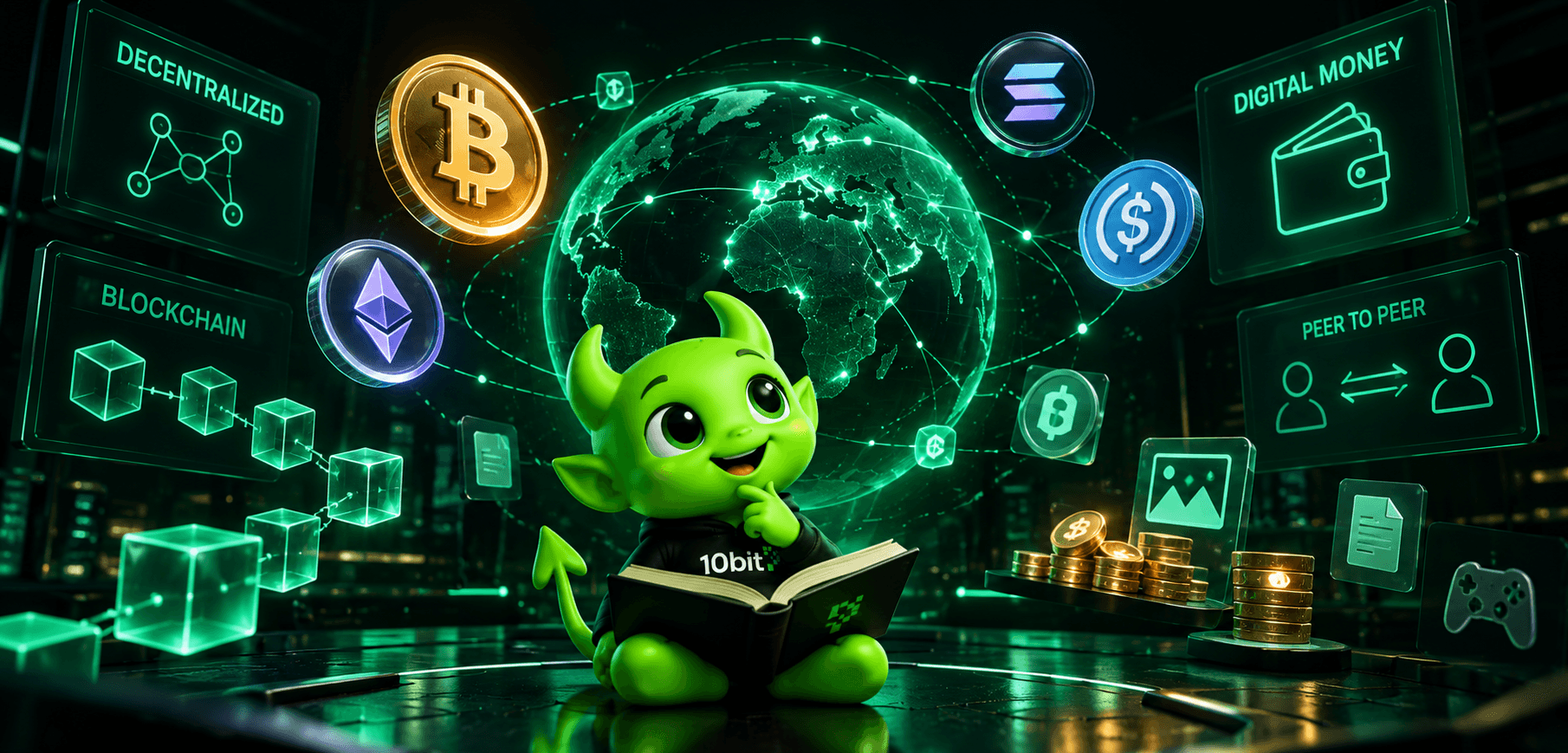
Think of cryptocurrency as internet money, but with a twist. When you send money through a bank, the bank verifies and processes the transaction. With crypto, that role is replaced by technology. There is no middleman. Transactions are peer to peer, which means they happen directly between two people.
For example, if you send bitcoin to a friend, you are not asking a bank for permission. The network itself verifies the transaction and records it. That is why crypto is often described as a system built on trust in code rather than trust in institutions. It is like a for the people initiative.
How Does Cryptocurrency Work?
To really understand what cryptocurrency is and how it works, you need to understand blockchain technology. This is the backbone of everything in crypto. A blockchain is essentially a ledger system that records every transaction. But instead of being stored in one place, it is shared across thousands of computers around the world.
Here is what happens when a transaction takes place: You decide to send cryptocurrency to someone. That transaction is sent to a network of computers. These computers check whether you actually have enough balance and whether the transaction is valid. Once verified, it is grouped with other transactions into a block. That block is then added to a chain of previous records. This chain is permanent and cannot be easily changed.
Who runs the computers? depends on the blockchain:
Individuals who want to support the network.
Companies that build blockchain infrastructure.
Crypto exchanges like Binance or Coinbase, which often run nodes.
Universities and researchers.
Developers working on blockchain projects.
Validators or miners, who earn rewards for helping secure the network.
That is what makes it reliable. Because this ledger is public, anyone can view transactions. This creates transparency. At the same time, your identity is protected through cryptographic keys.
What Is a Private Key in Crypto?
One of the most important things in crypto is your private key. You can think of it as the password to your funds. It is what allows you to access and control your cryptocurrency. If someone gets access to your private key, they can take your funds. And if you lose it, there is no “forgot password” option like a bank account. This is where crypto becomes powerful but also demanding. You are in full control, but that also means full responsibility.
Imagine you have a unique digital signature that only you can create because only you know your secret password (called a private key). When you send crypto:
You use your private key to digitally sign the transaction.
Everyone else uses your public key to verify that the signature is genuine.
They can confirm you authorized it, but they cannot figure out your private key from the signature.
The reason this is safe is that the underlying mathematics (elliptic curve cryptography in Bitcoin and Ethereum) makes it computationally infeasible to derive the private key from the public key or the signature. Even with incredibly powerful computers, it would take an impractically long time.
What Makes Cryptocurrency Different From Regular Money?
There are a few features that define crypto and explain why people are so interested in it.
1. First, it is decentralized. No bank or government controls it. This gives users independence.
2. Second, it is transparent. Every transaction is recorded on a public ledger, which reduces the chances of manipulation.
3. Third, it enables secure transactions. The system is protected using advanced cryptography, making it extremely difficult to hack the network itself.
4. Fourth, the prices move basis demand and supply so the volatility provides an opportunity for making a lot of money. And finally, it is borderless. You can send crypto anywhere in the world without worrying about exchange rates or banking hours.
Types of Cryptocurrencies You Should Know
Once you step into the crypto space, you quickly realize that bitcoin is just the beginning. There are thousands of different coins, each with its own purpose.
Bitcoin
Bitcoin is the first cryptocurrency and still the most well-known. Many people treat it as a store of value, similar to gold. For example, someone who bought bitcoin in 2015 for a few hundred dollars would have seen it rise to tens of thousands of dollars within a few years. That kind of growth is what brought global attention to crypto.
Alt Coins
Everything other than bitcoin falls under alt coins. These projects often try to improve on bitcoin or offer new use cases. Ethereum, for instance, allows developers to build applications on its network. Solana focuses on faster transaction speeds. Alt coins are where most innovation in crypto happens due to the access, interpretation and evolution of the tech.
Memecoins
Then there are memecoins, which started as internet jokes but gained serious traction. Dogecoin is the best example. It began as a meme but saw massive price increases due to online communities and social media influence. Memecoins highlight how powerful community sentiment can be in crypto. However, they are also highly unpredictable.
Stablecoins
Stablecoins are designed to reduce volatility. They are linked to real-world currencies like the US dollar. For example, 1 USDT is usually equal to 1 dollar. This makes them useful for trading and transferring money without worrying about price swings.
What Is Cryptocurrency Used For?
Crypto is not just something people hold and hope increases in value. It is actively being used in different ways.
One of the most common uses is payments. People use crypto to send money across borders quickly. Traditional bank transfers can take days and involve high fees. Crypto transactions can happen in minutes.
Another major use is investing and trading. People buy and sell cryptocurrencies hoping to benefit from price changes. This is where terms like “high returns” come into play.
There is also decentralized finance, where users can lend or borrow money without going through banks. This is changing how financial services work.
And then there are NFTs, which allow people to own digital items like art, music, or collectibles.
What Are the Risks of Cryptocurrency?
As promising as crypto sounds, it is not without risks. Prices can be extremely volatile. It is not unusual to see a cryptocurrency rise or fall by 20 percent in a single day as price is driven by volume of demand. Security is another concern. While the blockchain itself is secure, individuals can still fall victim to scams or hacks if they are not careful. There is also regulatory uncertainty. Governments around the world are still figuring out how to deal with cryptocurrency, and new rules can impact the market as governments look to try and gain control.
10BIT | Take
Cryptocurrency isn't just another financial product. It's a different way of thinking about ownership, trust and how value moves.
- Whether it eventually replaces parts of traditional finance or simply exists alongside it, one thing is already true: crypto has forced us to rethink what money can look like in a digital world.
- Some cryptocurrencies will disappear. Others may become part of everyday life. Nobody knows exactly how the story ends. But understanding the technology puts you in a much better position than simply reacting to prices and headlines.
Because before crypto became an investment, it was an idea. And understanding the idea is far more valuable than chasing the next coin.
Related Post

Aug 10, 2026
Bitcoin didn't just create digital money. It removed the middleman completely. Here's what it actually is, how mining works, and why it still matters in 2026.

Aug 3, 2026
What is blockchain? Learn how blockchain works, why it matters, and how it's used beyond cryptocurrency with simple examples anyone can understand.

Jul 21, 2026
Discover why millions invest (or regret investing) in cryptocurrency. Learn about Bitcoin, blockchain, decentralization, high returns, risks, and whether crypto is right for you.